Years ago, I replied to a difficult email four minutes after I opened it and read the first line. As I read it I felt my whole body tighten because this man was stealing my work, work that I had shared with him and he was claiming it as his own. I answered it in the same sitting, still inside the feeling the email had put me in and cc'd in two other people who he had introduced me to - I wanted them to know what he had done.
Nothing I sent back was cruel, but it was just quick, and final in a way the situation never actually called for and it ended with me telling them I will no longer be helping any of them. In a way you could say I was putting my foot down and protecting my boundaries but really I wonder if the response was necessary. A few hours of not reacting would have changed the entire tone of what I wrote so these days I have a rule: if it makes my chest tighten, it waits until tomorrow.
That's a fairly literal version of what reacting looks like most days. Something lands, an email, a comment, a delay in a reply, and the first sentence your mind produces gets treated as fact instead of as a guess or slowing down to think it through logically. You act on the guess before you've checked it.
Why the Fast Answer Wins by Default
Reacting fast isn't a character flaw because it's what the mind is built to do. It would rather hand you a quick, wrong answer than sit with an open question, because an open question feels like exposure and a fast answer feels like safety. Plus you can't muscle your way out of a reaction that has already started. Telling yourself to calm down is an order with no handle on it, it asks for a result and hands you nothing to do.
The sentence it hands you usually isn't new either. It's an old one, worn smooth from use, that fires the moment something looks close enough to a situation it's seen before. My sentence "This always happens to me" fired when I read that email and before this delay. The current moment barely gets a look-in and the old sentence answers on its behalf.
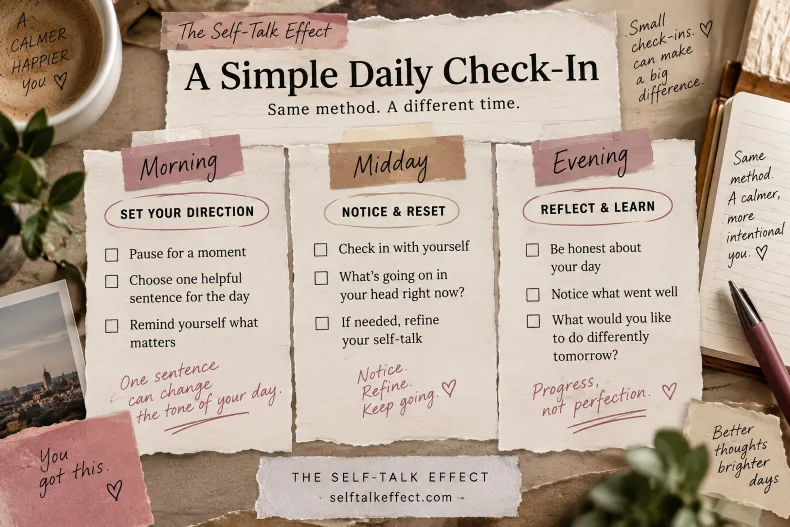
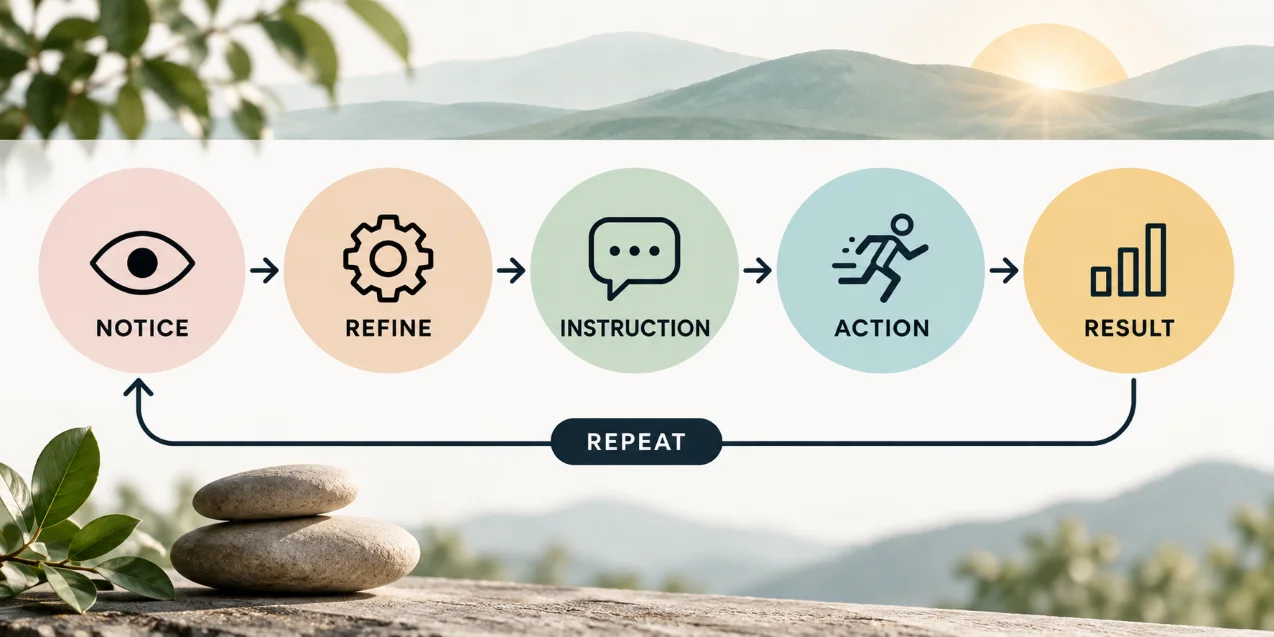
Self-coaching, at its most basic, is putting a few seconds between that sentence arriving and you acting on it but not so you suppress it but more just to check it before it drives.
The Four Questions Worth Asking First
Now, after training myself how to do it, these are the questions I actually use, in this order, before I let a reaction out into the world.
What actually happened, separate from what I've decided it means?
For example, an email arrived, reply didn't come or a tone landed a certain way, they are all the event. Everything else, "they're upset with me," "I've blown this," is your own interpretation stacked on top of it, and interpretation is where the emotional weight actually lives.
Is this the situation in front of me, or is this an old sentence wearing a new one?
Most reactions that feel disproportionate to the moment are proportionate to something earlier. Naming that doesn't make the feeling wrong, it just tells you where to point your attention.
What do I actually want to happen next?
Not what would make the sting go away right now, but what result you actually want six hours from now. Those two answers are often different, and the fast reply is usually aimed at the first one.
What would I tell a friend standing exactly where I'm standing?
You already have decent advice sitting in you for this exact situation. It's just harder to hear when you're the one it's about.
Running the Questions Against a Real Moment
Back to that email. What actually happened: sharing a new business service being offered, framing that service in exactly the way I told him i want to offer it, making out this is his idea.
What I'd decided it meant: People are always taking advantage of me. This always happens to me because I share too much. It's my fault for telling him in the first place.
Was this the situation or an old sentence wearing a new one? Old sentence. I've spent years believing people were always copying me without giving credit, that they were only out to take advantage of me because I was quiet, that being an introvert meant I will never get anywhere.
What did I actually want to happen next? A confident response outlining why I believed he was taking my work and claiming it as his own. Not a reply that expressed annoyance and ended the relationship in that moment, which is what my first draft was actually trying to do.
What would I tell a friend in my exact spot? Wait until tomorrow, then answer the actual content of the email instead of the tone you think you heard in it. This is what I do now. I wait a few hours or somethings a whole day and then I reply and say what needed saying and nothing else.
If you want a structured way to work through a reaction like this rather than a hypothetical one, the free 5-Step Negative Self-Talk Reset walks you through the same process step by step.
Where This Gets Hard to Use
The moments that need these questions most are the ones you're least likely to remember to ask them in the moment, because a racing pulse and a slow question don't naturally sit in the same few seconds, especially the first dozen times you try it.
What makes it easier isn't willpower, it's deciding in advance, on a calm day, which situations get the pause. Mine is anything that makes my chest tighten. Yours might be a specific person, a specific hour of the day, or a specific kind of message. Naming the trigger ahead of time means you're not trying to notice it and question it at the same moment, which is asking a lot of yourself in the middle of a reaction.
One Reaction, Written Down, This Week
Pick one reaction from the last few days, something you sent, said, or decided within minutes of it happening, write out the four questions and answer each one honestly, after the fact. You're not trying to undo what already happened, you're building the habit of asking, so the next one gets a few seconds of space it wouldn't have gotten otherwise.
The Email Was Never the Thing I Was Answering
I was answering an old sentence that happened to show up wearing that day's inbox and most fast reactions work the same way once you slow down enough to look. The event is almost always smaller than the interpretation sitting on top of it, and these four questions are just a way of checking the interpretation before it gets to send the reply for you.
If this is the kind of moment you run into often, Self-Coaching for Beginners covers the fuller method these questions are built on.